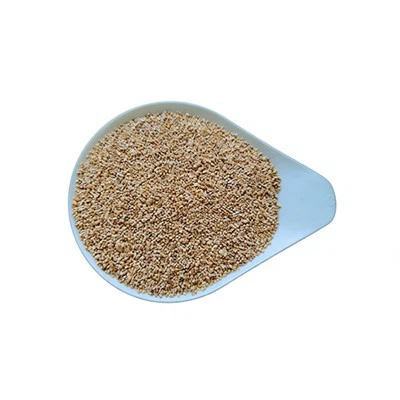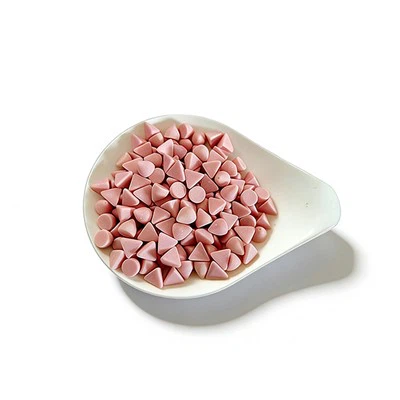
Choosing the correct abrasive media is one of the most important factors in mass finishing. Different media materials provide different cutting strength, surface effects, and finishing performance.
Ceramic media is commonly used for relatively aggressive deburring, edge rounding, and grinding. It is suitable for many metal components where efficient material removal is required.
Plastic or resin media generally provides a gentler finishing action. It can be useful for lighter deburring and applications where surface damage must be minimized.
Organic media such as walnut shell, corn cob, bamboo, and wood-based media is often used for drying, polishing, cleaning, or delicate surface finishing. These materials can provide a softer contact compared with conventional ceramic abrasives.
Media shape is also important. Triangles, cylinders, cones, balls, and other shapes create different contact patterns and can influence how effectively the media reaches corners and internal areas.
Media size should match the workpiece geometry. Large media may provide stronger processing but may not enter narrow gaps. Smaller media can reach complex areas but may require longer processing times.
Therefore, there is no single "best" tumbling media for every application.
The correct choice should consider the workpiece material, burr condition, geometry, required surface roughness, and final appearance.
A practical sample test is usually the best way to determine the ideal media combination.