



Grinding Polishing Machine
Industrial Grinding Polishing Machine & Surface Finishing Systems
This industrial surface finishing system removes heavy burrs, rounds sharp edges, smooths surfaces, and creates mirror finishes on metal stampings, precision casting parts, and CNC machined components. The system combines mechanical motion, abrasive media, and chemical compounds to process multiple parts at the same time without changing their shape. Built for continuous factory operation, it features variable frequency drive control and wear-resistant polyurethane processing chambers.







Complete Product Range for Metal Surface Finishing
Grinding Polishing Machines
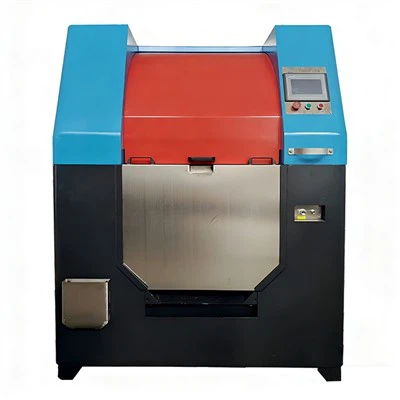
Centrifugal Barrel Finishing Machines: High-speed rotational movement for fast deburring and heavy material removal on small and medium precision parts.
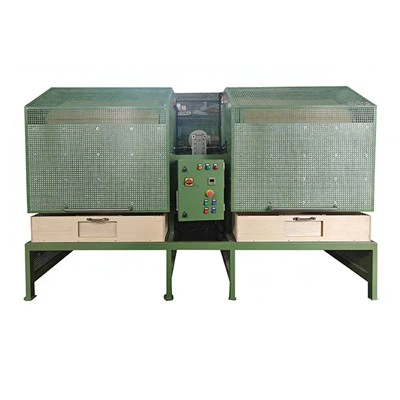
Vibratory Finishing Machines: U-shaped and rectangular chambers using three-dimensional vibration for general deburring, descaling, and surface preparation before plating.
Magnetic Polishing Machines: Uses magnetic force to drive small stainless steel pins into deep internal holes and threads without damaging delicate shapes.
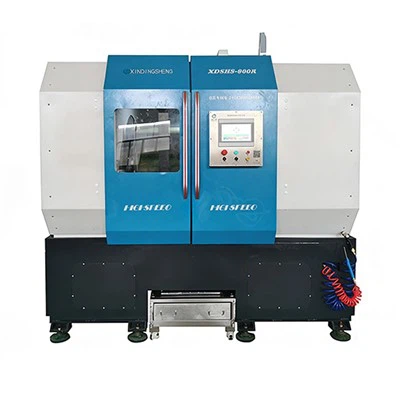
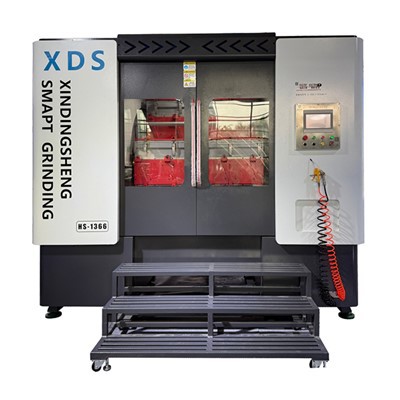
Drag Polishing Machines: High-speed orbital rotation that holds parts securely while dragging them through dense abrasive media for high-grade mirror finishes.
Abrasive Media
Ceramic Media: High-density cutting stones available in triangles, cylinders, and cones for heavy material removal on steel and stainless steel.
Plastic Resin Media: Low-impact abrasive stones mixed with aluminum oxide or silicon carbide to prevent edge chipping on softer metals like aluminum and brass.
Stainless Steel Pins and Shapes: Magnetic and mechanical burnishing media that provide high impact density to harden surfaces and create mirror finishes.
Vegetable and Walnut Shell Media: Organic drying and polishing media used for final oil absorption, degreasing, and scratch-free cleaning.
Integrated Grinding and Polishing Process
Rough Grinding and Deburring
Heavy material removal to eliminate burrs, flash, and laser-cut slag using dense ceramic media and active cutting compounds.
Intermediate Smoothing
Controlled edge rounding and surface smoothing using resin media to change rough tool marks into uniform matte textures.
Fine Polishing and Burnishing
Lowering surface roughness values using fine abrasive formulas and stainless steel or organic media.
Drying and Separation
Automatic mechanical screening to separate parts from media, followed by centrifugal or thermal drying to remove water and prevent rust.

Automotive and Aerospace: Precision gears, hydraulic valve blocks, turbine blades, and fuel injection parts that require strict burr-free standards.
Medical Devices: Surgical tools, artificial joints, and titanium bone plates that need smooth surfaces and zero micro-crevices.
Bathroom and Architectural Hardware: Brass faucets, stainless steel floor drains, and door handles that need flawless surfaces before plating.
Electronics and Enclosures: Aluminum boxes, connector pins, and stamped brackets that require precise edge rounding and clean finishes.
Customized Grinding and Polishing Solutions
Workpiece Testing
Engineering tests using client sample parts to find the best media type, compound mixture, and cycle time.
Automation Integration
Custom design for automated loading, parts-and-media separation, rinse lines, and closed-loop wastewater treatment systems.
Chamber Customization
Special polyurethane lining thickness, partition setups, and variable-speed control built for specific part shapes.
Quality Control and Process Verification
Dimensional Inspection
Coordinate Measuring Machines (CMM) and optical comparators to check that edge radiusing and size tolerances stay within limits after processing.
Surface Roughness Testing
Contact profilometers to measure exact surface roughness metrics and check mirror finish consistency across production batches.
Structural Integrity Testing
Hardness testing and metal checks to confirm zero surface cracks or stress caused by media impact.
Material Traceability
Spectrometer tests to ensure chamber steel and internal wear parts meet strict grade standards.
Certifications & Patents


FAQ