CNC machined parts can have burrs, sharp edges, tool marks, and uneven surfaces after machining. Choosing the right finishing machine depends on the part material, shape, surface requirements, and production volume.
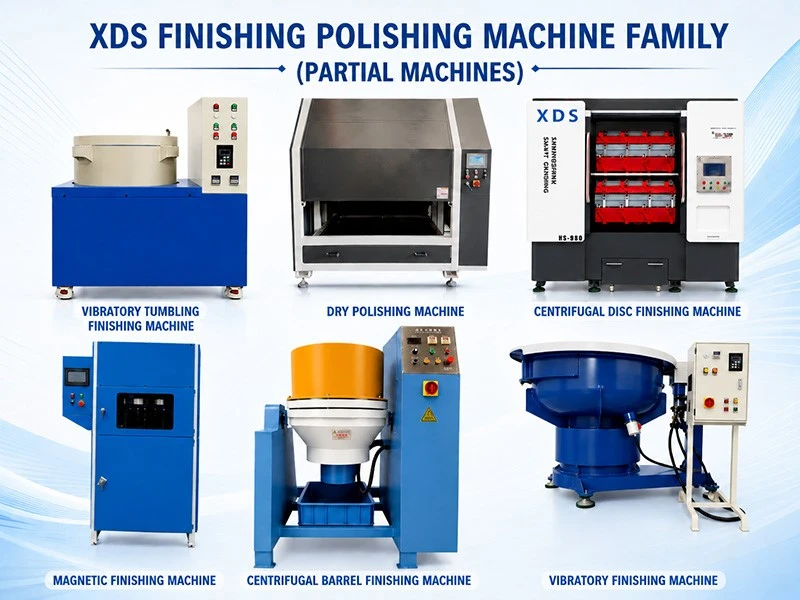
For small and medium-sized metal parts, vibratory finishing machines are commonly used for batch deburring, edge rounding, and surface finishing. They can process multiple parts at the same time and are suitable for many aluminum, stainless steel, copper, and steel components.
For parts that require stronger finishing action, a centrifugal finishing machine can provide higher processing intensity in a shorter cycle. This makes it suitable for precision hardware and CNC components where efficient deburring and surface improvement are important.
For small parts with holes, grooves, or difficult-to-reach areas, magnetic polishing machines can be a useful option. Small magnetic pins can reach areas that larger abrasive media may not access easily.
Media selection is also important. Ceramic media can provide stronger grinding and deburring, while plastic or organic media may be better for more delicate surfaces. The right media size should match the part geometry to avoid scratches or media entrapment.
A typical CNC finishing process may include:
CNC Machining → Deburring → Edge Rounding → Fine Finishing → Cleaning
Before selecting a machine, it is recommended to test the actual parts. Processing time, media, compound, loading ratio, and machine type can then be adjusted according to the required surface finish.
A suitable finishing solution can help reduce manual polishing, improve batch consistency, and make CNC parts easier to prepare for coating, anodizing, plating, or final assembly.